Why I wrote this book
Why this playbook exists
A cruise can look simple to buy and still be difficult to choose. The fare is prominent. The tradeoffs usually are not.
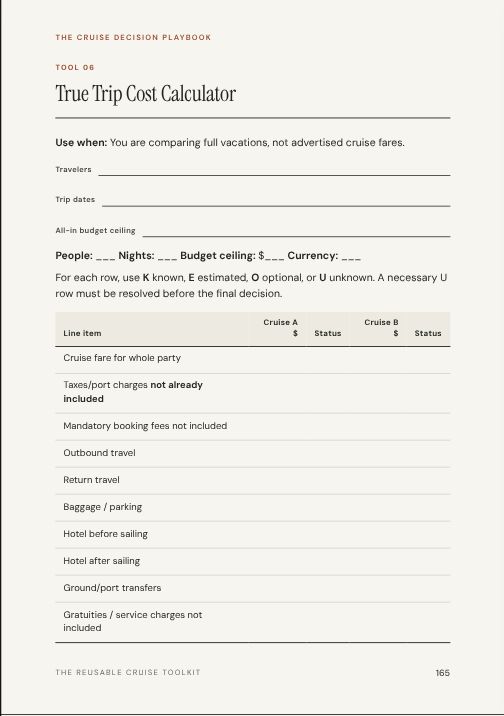
When I began bringing together the decisions that matter most, I kept returning to the same question: how can someone tell whether an appealing cruise is actually the right vacation for them? A list of generic tips wasn’t enough. The useful answers needed to be specific: what to compare between two cabins, which extra costs belong in the budget, when a package breaks even and which questions must be settled before a deposit changes hands.
That’s why I put the decision process at the center of this playbook. It starts by helping you define what a worthwhile trip looks like for your travel party. From there, it moves through ships, itineraries, cabin locations, total-trip costs and booking conditions before turning to shore plans, preparation and what to do when something changes.
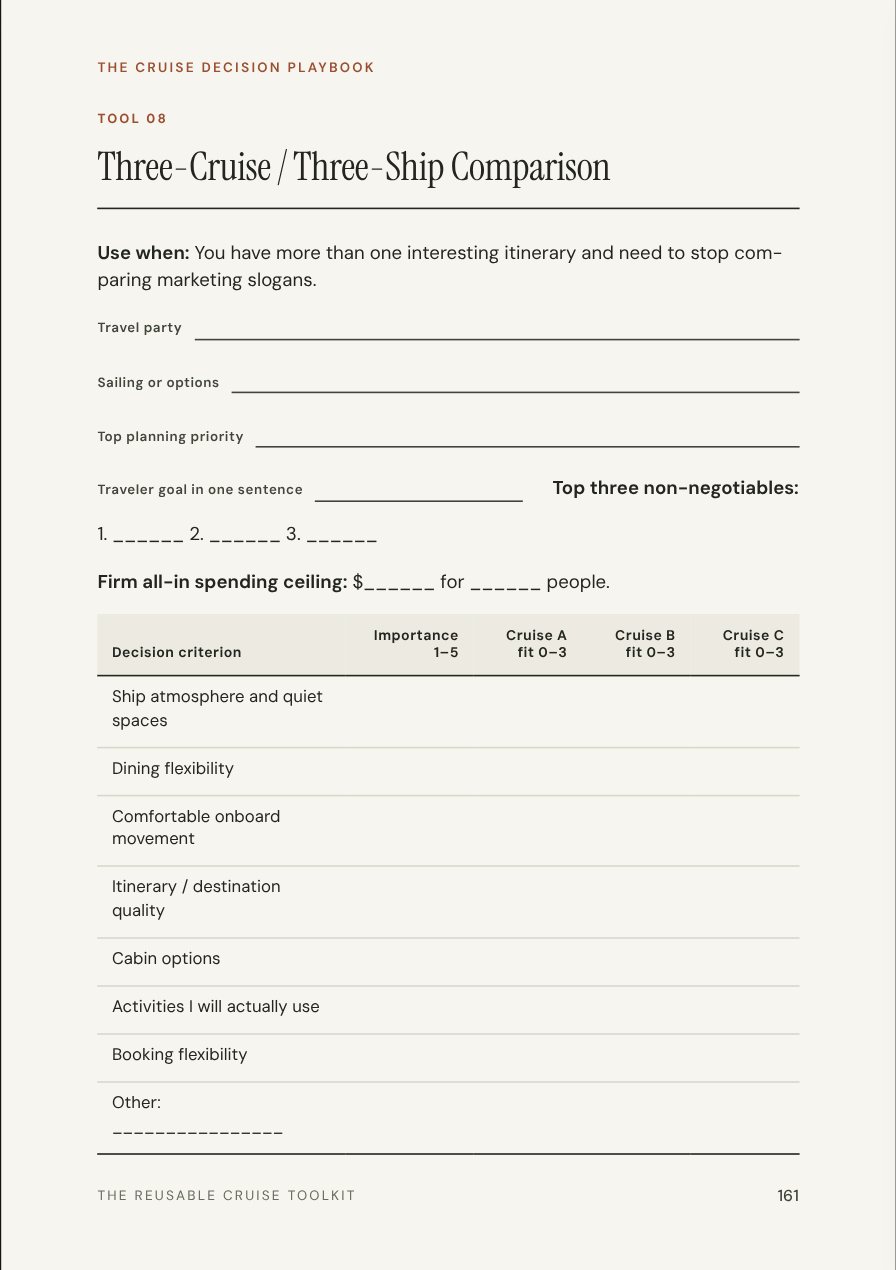
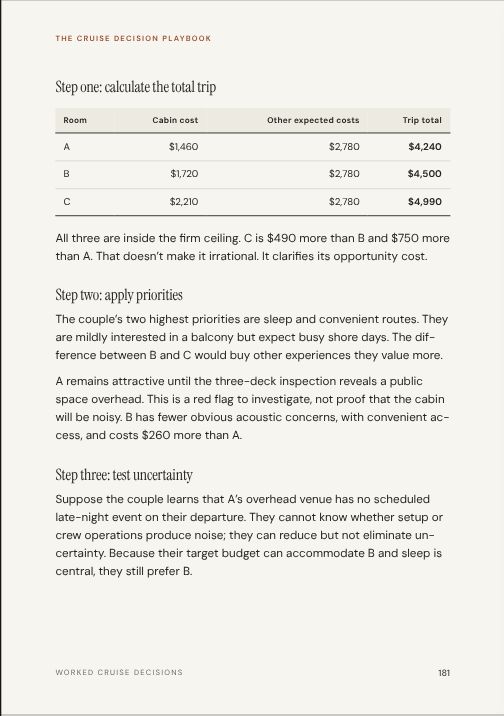
The worksheets matter as much as the chapters. You can read about cabin noise or hidden costs anywhere. It’s more useful to have a clear comparison in front of you when you’re choosing between real offers. The worked examples show how priorities and assumptions affect a decision without pretending there is one perfect cruise for everyone.
My aim is straightforward: when you’re ready to book, you should understand why this voyage, this cabin and this fare fit you—and which uncertainties you’re accepting. That’s a much better starting point than hoping the cheapest-looking offer turns out to be the best.
— Cruise Smarter